
Welcome to Baltimore Yearly Meeting!
Baltimore Yearly Meeting nurtures a vibrant Quaker community across the Mid-Atlantic. BYM unites Friends from 50 Quaker meetings and worship groups throughout Virginia, Maryland, Pennsylvania, West Virginia, and the District of Columbia.
Together at BYM Friends we
Strengthen Local Meetings
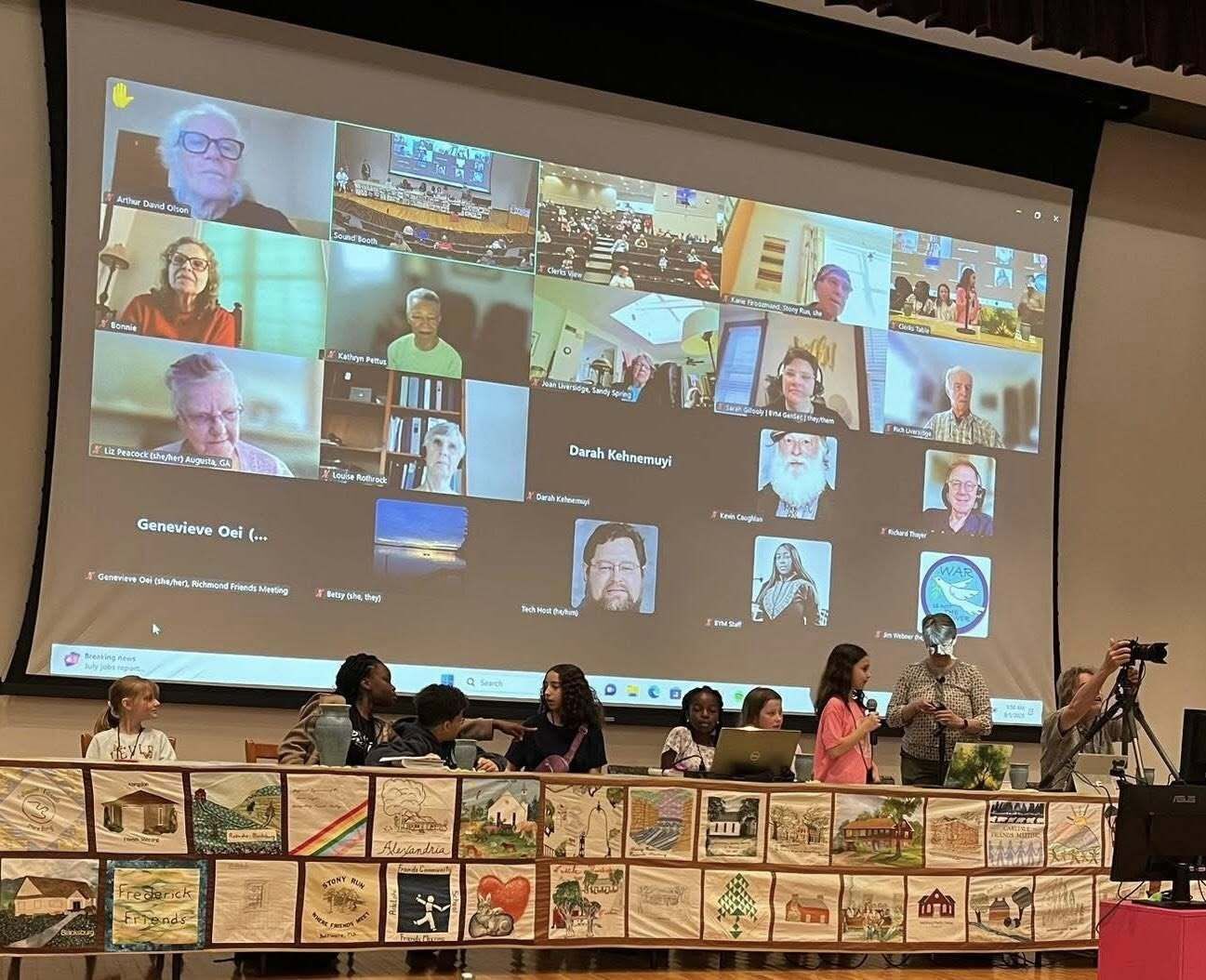
The monthly meeting is the beating heart of everything we do. At its core, the yearly meeting is an association of Quaker monthly meetings and other local worshipping communities coming together to support one another. We share a common Faith & Practice - and we share our skills, gifts, spiritual leadings, and resources across local worshipping communities.
Grow in Spirit & Community
Quakers believe that there is “that of God” in every person—an Inner Light that is loving and honest and can lead us to truth and justice. As BYM Friends we gather for Meetings for Worship four times each year to discern the Leadings of the Spirit and to conduct our community business and three more times throughout the year for spiritual formation retreats.
Nurture Youth
BYM has a special commitment to the spiritual, social, and emotional thriving of all young people. Our camps and youth retreats are vibrant, diverse, youth-centered communities. BYM scholarships and grants provide material support to children, families, and child-serving organizations, and the Religious Education Committee connects meetings to resources for nurturing youth.
Connect & Serve as Friends
Working together is an extension of our worship into the practical life of Quakerism. Working together benefits both the wider community and those Friends who participate. We serve together on Committtes, gather for service projects and social witness, and are part of the worldwide body of Quakers - connected to 14 organizations and hundreds of thousands of Friends around the world.